
FoundationFashion.
Foundation Degree in Fashion Styling and Techniques
“Learning fashion by doing”
The Foundation in Fashion Styling and Techniques combines creativity, technique and dress culture so that students can design and make their own fashion projects. From idea to finished piece, they learn to experiment, design and present their work.
- Language
- Bilingual
- French and English
- Duration
- 2 years
- Credits
- 120 ECTS
- Intake
- September
The programmeFashion Foundation.
The FEDE Foundation Degree in Fashion Styling and Techniques is a two-year programme devoted to the core skills of fashion design, pattern making, garment construction, textile technology and brand building.
At the crossroads of creativity, technique and fashion culture, the programme prepares future professionals to design, produce and showcase their collections. Combining high aesthetic standards, command of digital tools and the practical constraints of the industry, it relies on hands-on teaching (workshops, applied projects and experimentation). Students come away with a solid foundation to enter the job market or move on to advanced academic studies.
This programme enables students to…
- Illustrate garments and accessories, handling shape, line, colour and texture with traditional and digital tools.
- Conceptualise collections and make prototypes for different market sectors.
- Draft patterns from sketches, photos or technical sheets, respecting shapes, volumes and the brief.
- Construct garments that meet industry standards and the finishing requirements of the target market.
- Understand production and distribution flows, the properties of materials and quality control.
- Apply digital skills to fashion projects (Adobe Suite, Lectra, Gemini, Marvelous Designer, Blender).
- Draw on the history of costume and fashion, on trends and on critical analysis when designing.
- Develop professional working methods that strengthen organisation and independence.
Two yearsto lay the foundations.
Year 1
The foundations of fashion design
The first year teaches the essential methods of creative research applied to fashion design, while developing fashion drawing technique. Learning pattern cutting, cutting and sewing lets students make complete garments. Digital design tools are gradually brought into practice, as are the theoretical notions and concepts of fashion styling and garment construction. Building up a historical, aesthetic and sociocultural frame of reference specific to the industry feeds the student’s imagination and gradually develops a broad fashion culture.
Year 2
Deepening fashion practice
The second year deepens technical and creative knowledge and builds structured know-how. Practising a range of drawing techniques strengthens fashion illustration skills and helps shape the student’s artistic identity. The process of developing a clothing collection is explored in depth, and pattern-cutting and sewing skills are extended and applied to complex designs. Learning grows to include professional digital tools for design, 3D and project presentation. Alongside this, theory courses sharpen a critical eye and nurture a solid culture of art and fashion.
Year 3 · Possible next step
Fashion Bachelor
Students may go on to the FEDE European Bachelor in Fashion Styling and Techniques.
Discover the Fashion Bachelor
What youwill study.
The courses are organised into categories, each made up of teaching units, summarised below.
From Antiquity to contemporary fashion, this course explores art history, semiology and image analysis. By decoding forms, uses and intercultural or technological influences, students study the major figures of design to place their own projects in context. This theoretical and technical immersion helps them understand what is at stake socially in clothing and develop a genuine fashion culture.
“[…] Over the centuries, the Romans thus succeeded in imposing a true dress code: the toga as a sign of Roman identity and citizenship.”
— Cyrielle Landrea, La toge et les codes vestimentaires à Rome, 2019 Through theoretical, historical and cultural knowledge, this module develops a creative approach expressed in research boards and moodboards. Drawing on colour theory and the analysis of trends, silhouettes, body shapes and dress codes, students learn to structure their ideas for a specific target. From there, a context and a brand universe take shape.
“Ideas come from working, but research has to come before the idea.”
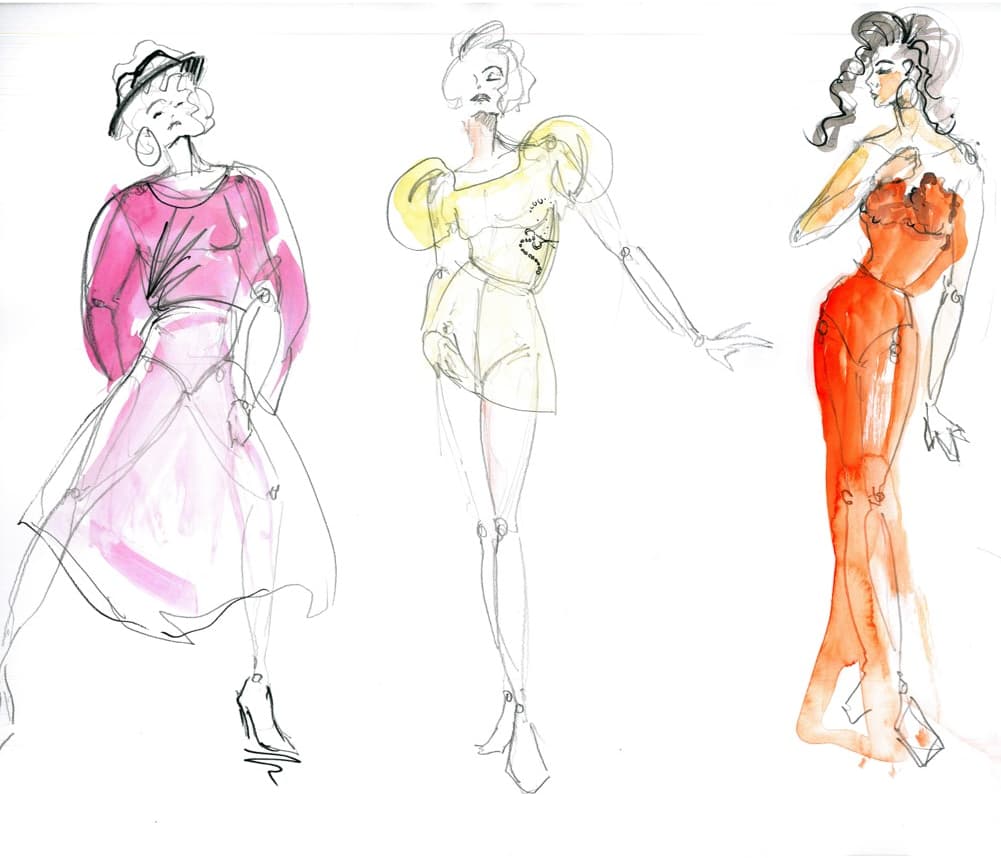
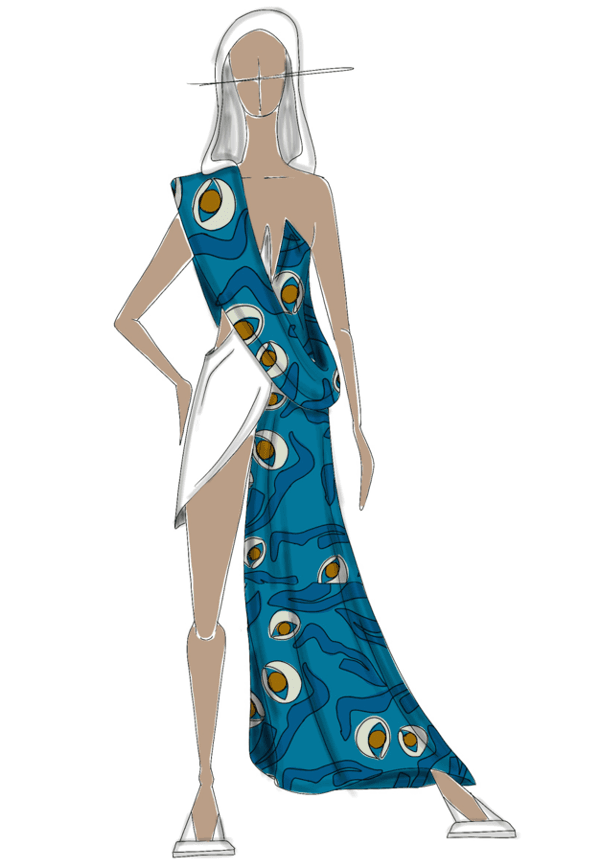
— Karl Lagerfeld Focused on asserting a graphic identity, this module develops drawing dexterity and command of the quick sketch. Students learn to depict the garment from every angle: proportions, fashion figures, poses, textures, rendering of materials and colouring. They explore style and tone by hand and digitally, imagining figures of inspiration (muses) and bringing silhouettes, looks and illustrated mini-collections to life.
“A good sketch is worth more than a long speech.”
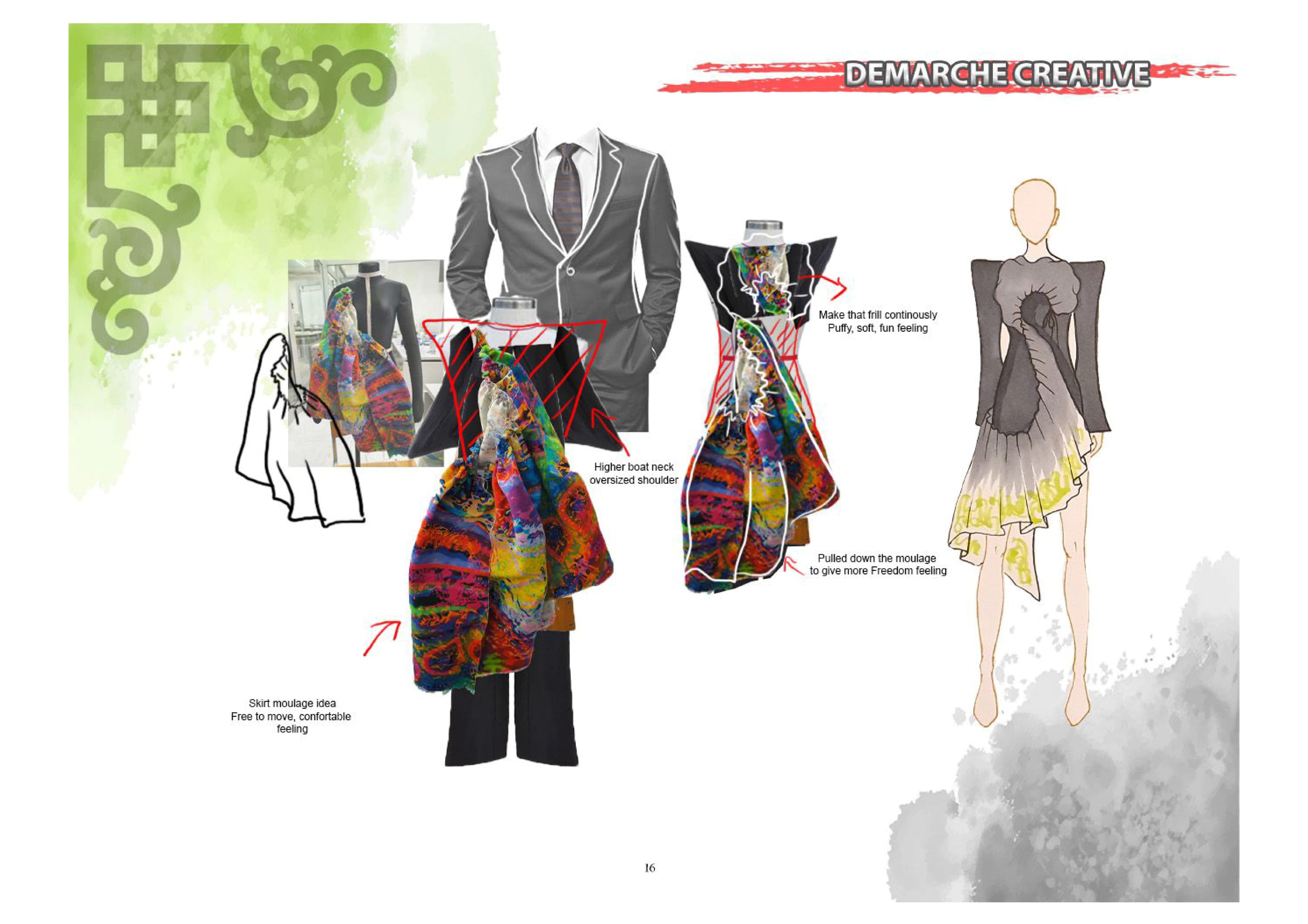
— Yves Saint Laurent Drawing on every module of the programme, this unit is devoted to the methodology of collection design: from the search for inspiration to the development of shapes and volumes, by way of the moodboard, colour board, fabrics, silhouettes, flat drawings and collection plan. Students learn to bring their skills together to design coherent collections suited to a theme, a quality range or a specific type of garment. The module puts the search for meaning at the heart of the process, to give the project a distinctive identity and shape the DNA of both designer and collection. The result is presented as a Book.
“A collection is a story you tell, and it must have perfect continuity.”
— Giorgio Armani Devoted to the rigorous move from fashion sketch or flat drawing to physical reality, this module teaches the technical basics of pattern making and sewing. Students learn to translate a two-dimensional idea by drafting basic blocks, which they then develop into unique, original pieces. In the sewing workshop, training runs from study pieces that master construction details to final assembly on the machine, alteration techniques included. Students draw on all these skills to make prototypes and a range of garment types that meet the industry’s requirements.
“A good couturier must be an architect for the plans, a sculptor for the shape, a painter for the colour, a musician for the harmony and a philosopher for the measure.”
— Cristóbal Balenciaga Devoted to the economic and operational viability of clothing, this module unpacks the practical realities of the fashion industry. Students go behind the scenes of the sector: flow management, responsible sourcing — upcycling included —, production logistics and the calculation of cost and selling prices. The emphasis is on the move from design studio to production workshop: students learn to produce rigorous technical sheets and professional tech packs. They gain the tools they need to work with factories, keep costs down and turn a creative piece into a product that can be sold at scale.
“Taste and talent are not enough; only style counts. And to me, style is the market.”
— Pierre Cardin Designed to approach digital technology as a true creative medium, this module explores the technologies shaping contemporary fashion. Digital tools are treated as an extension of the creative gesture at every stage of a project: from flat drawings, moodboards and technical files in the Adobe suite to digital pattern cutting in Lectra and Modaris/Gemini. The creative chain continues with styling, draping and 3D simulation in Marvelous Designer and Clo 3D, and finally Blender for modelling accessories, lighting and animation. By making these tools their own as a means of experimenting and delivering to industry standards, students create striking virtual visuals for their collection books and marketing projects.
“For me, a truly revolutionary step was taking those flat garment shapes and being able to assemble and drape them digitally into a 3D render.”
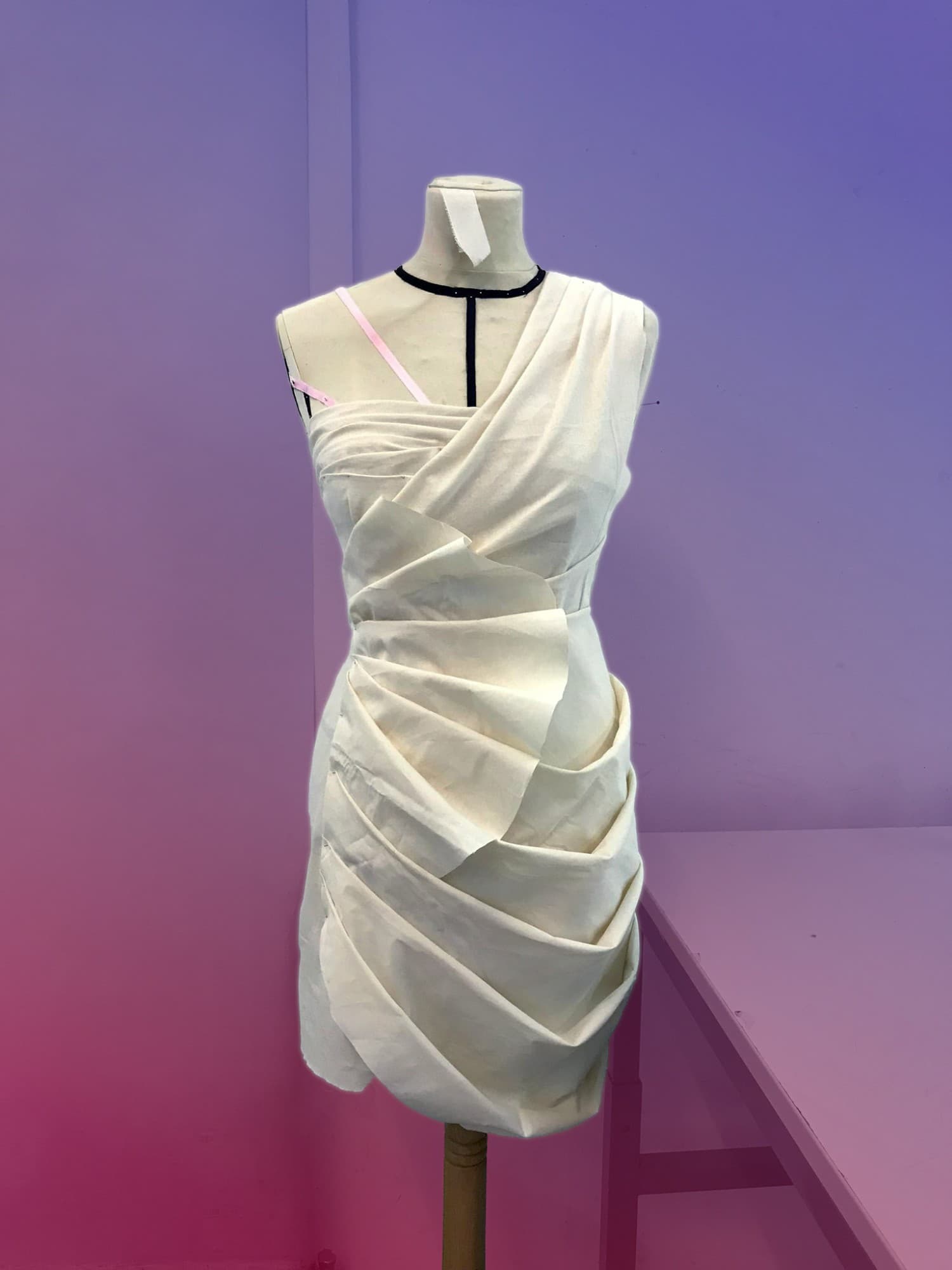
— Ed Crutchley, Creative consultant at Louis Vuitton Devoted to three-dimensional design, this module puts the art of volume and work on the silhouette at the heart of the creative process. Through a study of textiles, students get to grips with fabric, its drape and its behaviour, to understand its close relationship with the garment. They then learn draping, working the toile directly on the dress form. This immersive teaching favours the search for structure, experimentation in relief and mastery of folds. By sculpting fabric by hand, students free their gesture to bring out new lines and give life to bold silhouettes.
“I wanted to be a sculptor. For me, working with fabric or with stone is the same thing.”
— Madame Grès Designed to FEDE’s official framework, this module centres on European citizenship and language immersion. The first part offers a critical understanding of the European model, its institutions, its legal framework and its democratic values.
On the language side, rather than traditional language classes, the programme relies on everyday bilingual teaching, so that students naturally become familiar with international vocabulary and practice. The level targeted is B1/B2 for speaking and B2 for reading.
With this in mind, the school focuses specifically on preparing students for the European citizenship exams, with revision sessions, texts and mock exams provided by FEDE.
“Nothing is possible without men; nothing is lasting without institutions.”
— Jean Monnet, Memoirs, 1976
Culture, history & visual analysis
From Antiquity to contemporary fashion, this course explores art history, semiology and image analysis. By decoding forms, uses and intercultural or technological influences, students study the major figures of design to place their own projects in context. This theoretical and technical immersion helps them understand what is at stake socially in clothing and develop a genuine fashion culture.
“[…] Over the centuries, the Romans thus succeeded in imposing a true dress code: the toga as a sign of Roman identity and citizenship.”
Afterthe programme.
Graduates have many options: starting a career in a design studio, a workshop or a production house, or continuing their studies. To do so, they can choose the FEDE Bachelor at Canvas or join another fashion school to deepen their expertise.
Possible careers include
- Assistant fashion designer
- Fashion designer
- Fashion illustrator
- Pattern maker
- Garment technician
- Junior production coordinator
- Visual merchandiser
- Image stylist
- Client adviser
- Fashion consultant
The programme also prepares students for further studies, including:
- Bachelor in Fashion Styling and Techniques
- Bachelor in Fashion Design
- Bachelor in Pattern Making and Sewing
- Another FEDE Bachelor (Digital Marketing, Merchandising and Sales Management…)
A questionabout the programme?
For more information, get in touch through the contact page, or directly by email, phone, WhatsApp or Telegram.
Other programmes
All programmes