Our Story
MORE THAN A
SCHOOL
An ecosystem.
Canvas Today
Building the future on experience
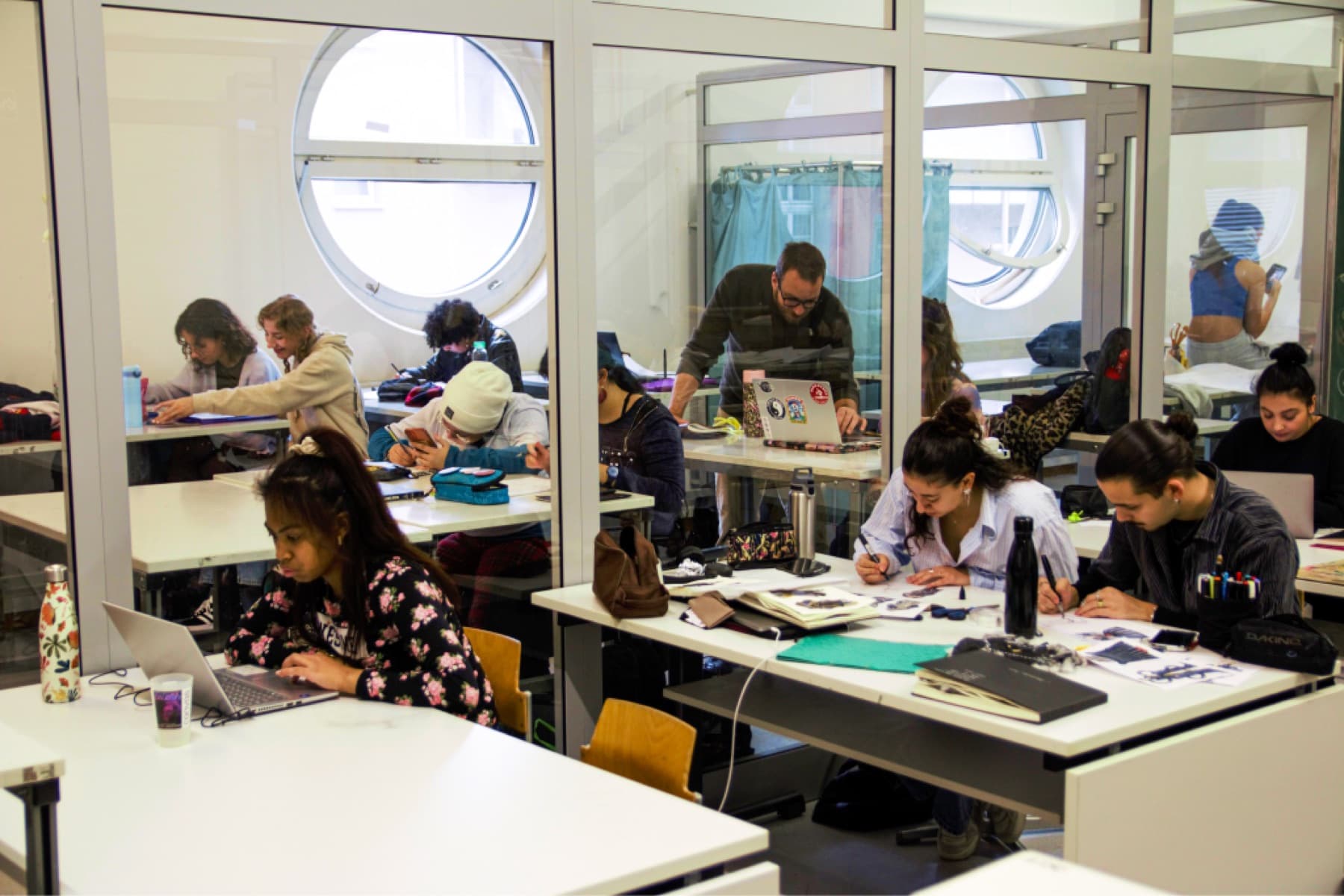
Creative industries are evolving fast, and the boundaries between fashion, design, image, digital and communication are becoming increasingly hybrid. In response to these shifts, Canvas continuously evolves its teaching to prepare students for the realities of today's creative professions.
Programs are developed in line with FEDE's pedagogical frameworks and the demands of the professional world. Through flexible, bilingual teaching, students also build the language skills and cultural fluency needed to thrive in an international environment.
Teaching is built on essential fundamentals such as drawing, composition, color, volume and visual storytelling. The study of art history, costume, graphic design, film and visual culture, alongside hands-on training in digital tools, also plays a central role in the curriculum. These references help students develop a personal creative identity and a deep understanding of contemporary visual languages.
A studio- and project-driven pedagogy
Canvas is developing a teaching model inspired by creative studios, design agencies and contemporary production environments.
Programs are structured around core courses, bootcamps, electives, micro-electives and studios, allowing students to build solid fundamentals, progressively develop their specialization and work on real projects.
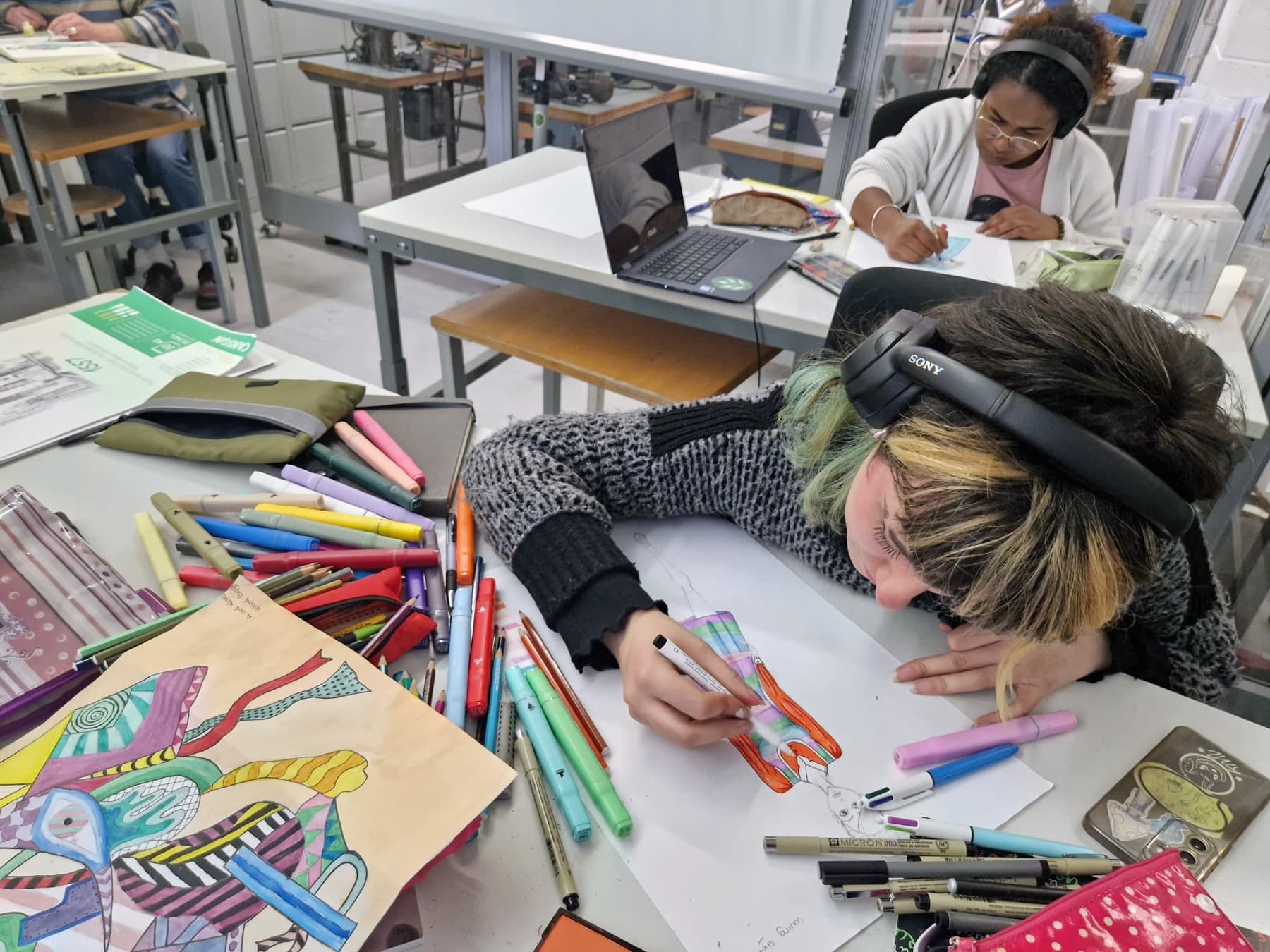
Students work in collaborative environments where practice, research, experimentation and art direction form the core skill set. Interdisciplinary projects blend fashion, graphic design, illustration, branding, image, 3D, digital fashion and visual communication.
This career-focused approach builds both creativity and the essential skills of creative practice: understanding a brief, time management, technical production, teamwork, project presentation and quality of final output.
Canvas Tomorrow
The new frontiers of creation
Creative professions are being reshaped by new technologies, new habits and constantly evolving markets. Canvas continues to grow in order to train versatile creative profiles, capable of adapting to these changes and seizing the opportunities they bring.
The school is developing new approaches around digital fashion, 3D creation, art direction, branding, new visual media, and artificial intelligence applied to creative workflows.
Canvas is also launching a new branch dedicated to Fashion & Design Marketing, covering brand strategy, visual communication, content creation, social media and storytelling.
Across all of its programs, the school has pursued the same ambition for more than thirty years: helping every student develop their creative potential and preparing them for the present and future professions of fashion, design and visual communication.
Mission
To train creative professionals able to turn their ideas into concrete, lasting projects, giving them the skills, methods and confidence needed to thrive in the creative industries.
Vision
To shape a new generation of creatives able to drive the transformation of fashion, design and visual communication, at the crossroads of culture, technology and innovation.
Philosophy
Creativity grows through practice, experimentation and visual culture. Canvas combines artistic fundamentals, critical thinking and hands-on project experience to help every student build their own creative approach.
30+ YEARS OFcreative futures.
1993
Canvas founded in Lausanne
1995
First fashion show at the Beau-Rivage Palace
1997
FEDE accreditation
1998
International expansion
Paris • Annecy • London • Venice • Tunis
2017
Made in Swiss
2020
AVDEP
2025
New pedagogy
Core Courses • Bootcamps • Electives • Studios
2030+
Future Creative Industries
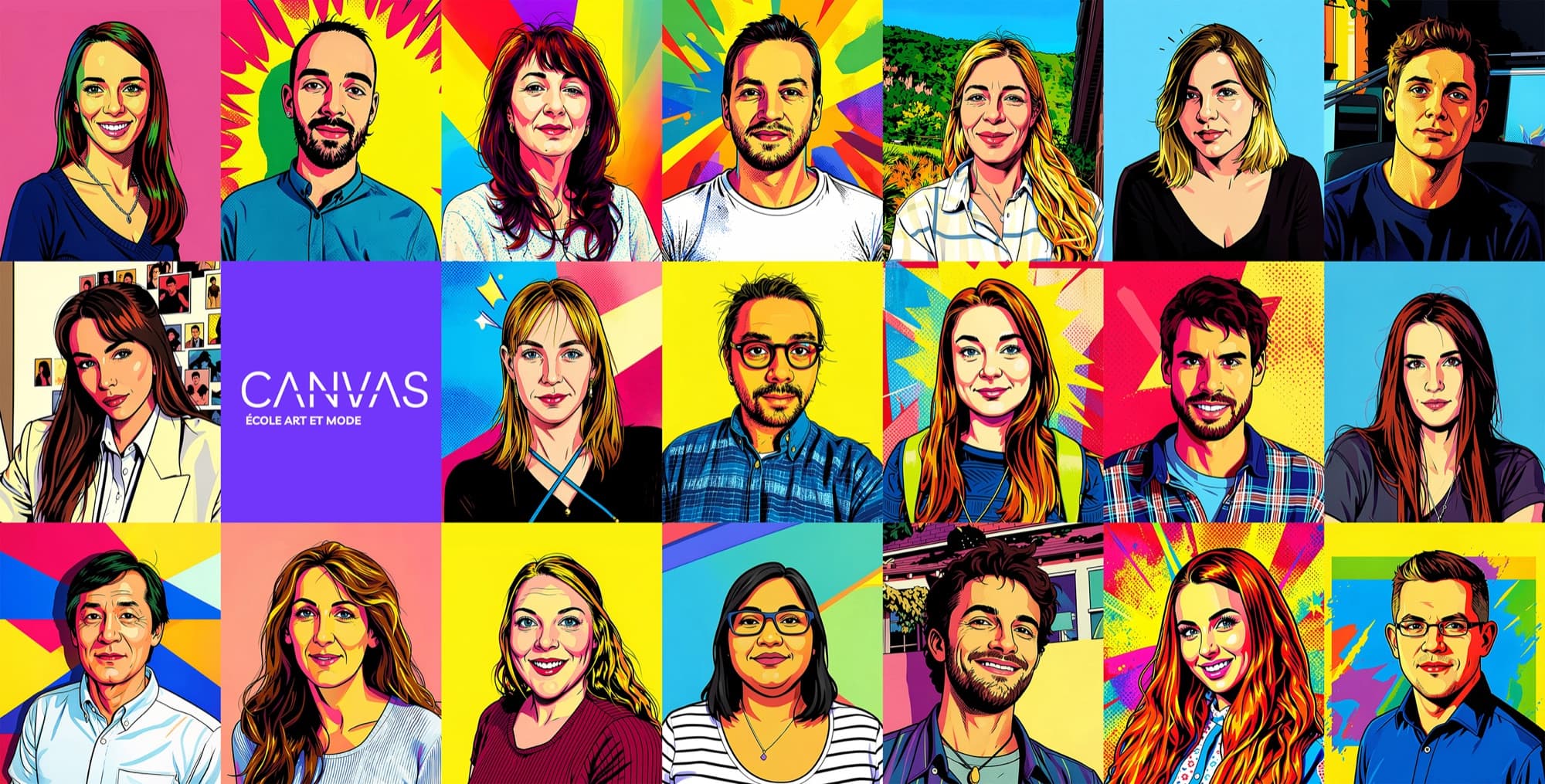
Teaching Staff
THE TEAM.
Quality Label
ACCREDITATIONS
THAT MAKE
the difference.
Quality labels and certifications are a decisive criterion when choosing a course of study, because they clearly attest to the standard of the teaching, the competence of the trainers and the rigour of the institution. They reflect a concrete commitment to continuous improvement, going beyond legal requirements. These recognitions also set a school apart through the soundness of its organisation and the relevance of its teaching resources. Finally, they greatly strengthen the credibility of the training with institutions and companies, making it easier for graduates to enter the profession.
Professional recognition
Certified programmes
- 2 FEDE Foundation Diplomas — “Fashion Design and Techniques” and “Applied Arts and Contemporary Media” at level 5 (Bac+2)
- 2 FEDE Bachelor Diplomas — “Fashion Design and Techniques” and “Visual Arts and Emerging Media” at level 6 (Bac+3/4)

European Federation of Schools
The FEDE (European Federation of Schools) is an International Non-Governmental Organisation (INGO) committed to developing a shared higher education area on an international scale. It brings together nearly 560 institutions across 44 countries, federated around values of high standards, quality and innovation in education. Joining a FEDE-accredited programme means joining a dynamic community of students, where creativity, exchange and collaboration enrich everyone's path. It also means earning diplomas built on curricula designed in close connection with the realities and shifts of the job market — genuine guarantees of quality and recognition. Students grow in an open, stimulating environment that values academic freedom and is committed to making education accessible to all.

Vaud Association of Private Schools
The Vaud Association of Private Schools (AVDEP) is a network of institutions committed to the quality and excellence of private education in the canton of Vaud. Membership of the AVDEP guarantees compliance with recognised framework conditions, along with a structured and demanding educational environment for students. The association also works to promote private education and to represent the interests of member schools before the cantonal authorities.

Swiss Made — Swiss Label
Swiss Label is an organisation whose mission is to promote the finest Swiss products and services. Recognisable both in Switzerland and internationally by its crossbow emblem, the label is a genuine mark of quality, recognition and reliability abroad. Membership of Swiss Label reflects the commitment of member institutions and companies to uphold these values and to contribute to the international standing of Swiss craftsmanship.
Software taught
THE TOOLS OF
PROFESSIONALS,
from year one.
The school offers programmes that integrate the digital tools and software that are essential across the creative sectors. Determined to prepare its students for the demands of the market, it makes sure they are trained on the software most commonly used by professionals. In an era of development, prototyping and visualisation in virtual environments and animation, these technologies allow them to create precise, innovative projects that align perfectly with professional standards.

Lectra
Lectra is an international group recognised for its expertise in the fashion, textile and apparel sector. Its technology offering, among the most complete on the market, covers the entire value chain — from design to cutting, through to production and distribution. With over 40 years of experience and a collaboration with more than 21,000 companies worldwide, Lectra also works with schools, training students to use specialised software while supporting industry professionals in adopting innovative, high-performance solutions.
Skills gained
- Industrial design
- Production management
- Material optimisation

Gemini CAD Systems
Gemini develops software dedicated to the fashion and textile industry, specialised in design and pattern modelling. Complementary to Lectra's solutions, which are mainly used by large companies, Gemini's tools offer more accessible options, particularly suited to future independent professionals and small structures.
Skills gained
- Technical pattern making
- Grading
- Cutting layout
- Production

CLO 3D
CLO 3D is professional 3D garment simulation software, widely used across textile design and digital fashion creation. It makes it possible to design, model and visualise garments realistically on an avatar, without going through a physical prototype stage. Patterns are assembled virtually in 2D to create 3D pieces, with a faithful rendering of materials, textures and the drape of the fabric. Students can test cuts, adjust volumes and simulate how garments behave in real time. The tool has become an essential reference for innovation, prototyping and marketing in the fashion industry, offering a skill that is directly valuable on the professional market.
Skills gained
- 3D pattern making
- Fabric simulation
- Virtual prototyping
- Fashion presentation

Adobe Suite
The Adobe suite, made up of essential tools such as Photoshop, Illustrator, InDesign, After Effects and Premiere Pro, is widely used across design, digital creation and visual communication. Integrating it into the training at Canvas allows students to build concrete, directly applicable skills that align perfectly with the demands of the job market.
Skills gained
- Photoshop
- Illustrator
- InDesign
- After Effects
- Premiere Pro

Blender
Blender 3D is open-source software for 3D modelling, animation and rendering, used across design, digital creation and animation. It makes it possible to create realistic objects, environments and characters — from modelling to animation, by way of texturing and lighting. Increasingly adopted by major industries, from Hollywood studios to AAA video games, Blender gives students a skill that is directly valuable on the professional market.
Skills gained
- 3D modelling
- Animation
- Texturing and lighting
- Photorealistic rendering

Unreal Engine
Unreal Engine is software for designing 3D environments and real-time interactive experiences. It allows you to build scenes, manage lighting, create materials and produce polished renders. Compatible with models made in ZBrush and Blender, it supports a complete workflow, from sculpting or modelling through to final visualisation. Integrating it into the Canvas curricula aims to bring technical and creative skills applied to 3D production, which are essential in video games, digital art and visualisation.
Skills gained
- 3D environment design
- Lighting and material management
- Real-time rendering
- Blender & ZBrush to Unreal workflow
- 3D production (video games, digital art & visualisation)